Setting up utilities when moving to Texas — the deep guide

The canonical answer to "how do utilities actually work in Texas" — written for someone who just signed a lease or closed on a house here, and is about to discover that the utility experience is meaningfully different from every other state they may have lived in.
The 85% rule: most of Texas, but not all of it
About 85% of Texans live in deregulated electricity markets — Houston, Dallas, Fort Worth, the Rio Grande Valley, and most of the suburban belts. In those markets, the wires are owned by a transmission and distribution service provider (TDSP) — Oncor, CenterPoint, AEP, or TNMP — and the actual electricity is sold by a retail electric provider (REP) of your choice. Dozens of REPs compete for your account.
The other 5 million Texans live in regulated territories. The four big ones: Austin Energy (city-owned muni serving Austin), CPS Energy (city-owned muni serving San Antonio), El Paso Electric (regulated investor-owned utility), and Entergy Texas (regulated, serving Beaumont/Lufkin). In those territories you don't pick a REP. The utility's rate is set by a board or commission. Setup is a single phone call.
Before you do anything else, figure out which side of that line your address falls on. Our regulated-cities guide covers what to do in the non-deregulated territories.
The setup order, by lead time
- Electricity (1–3 days, same-day in deregulated TX before 5 p.m.). In deregulated Texas this is the fastest utility — and the one with the most consequential decision. You'll need an ESID (your meter's unique identifier), a lease or move-in date, ID, and SSN/ITIN for the soft credit pull.
- Water, sewer, trash (city, 1–2 weeks). Almost always run by your city. Many cities still require an in-person visit, a signed lease, ID, and a deposit ($50–$200). If you're moving to an exurb, you may also have a Municipal Utility District (MUD) layered on top — see the MUDs explainer.
- Gas (1–2 weeks). Atmos, CenterPoint Energy, or another regional gas utility. A technician must come out to pressure-test the line and light pilots. Someone must be home for a 4-hour window. Slots fill fastest around the 1st and 15th of each month.
- Internet (7–14 days). Self-install cable kits ship in 2–3 days. Fiber installs that require a tech book 7–14 days out. Holiday weeks stretch to 3 weeks.
The plan-type decision: fixed, never variable
In a deregulated market you'll be offered fixed-rate plans (12 or 24 months) and variable-rate plans (no contract, the price changes monthly with the wholesale market). Pick fixed. February 2021 produced wholesale-rate passthrough events in the thousands of dollars for variable-rate customers. The savings on variable in normal months don't come close to compensating for the tail risk. Even a flat-rate prepaid plan beats variable for risk management.
Within fixed-rate plans, the marketing trap is the bill credit. A plan can advertise "6.9¢/kWh" but only deliver that price at exactly 1,000 or 2,000 kWh of monthly usage. Use 999 kWh and the effective rate jumps. Always pull the Electricity Facts Label and check the rate at your usage tier — see our cheapest-plan guide.
Deposits, credit, and the soft pull
Most TX REPs do a soft credit pull at signup. With a 640+ FICO and autopay enrollment, the deposit is usually $0. Below 640 or with thin credit, expect $200–$400. You can avoid the deposit with a Letter of Credit from your previous provider showing 12 months of on-time payments, or by choosing a prepaid plan. Water deposits ($50–$200) are set by the city's ordinance and are non-negotiable.
Identity theft is a real cost of moving
To open a utility account you'll hand over name, DOB, SSN, prior address, current address, and phone number. That's the exact bundle identity thieves want most. Freeze your credit at all three bureaus before you start, lift it briefly for the soft pull, then refreeze. Never give SSN to an inbound caller. See the identity-theft guide.
The two ERCOT lessons every newcomer needs
Lesson 1: insulate exposed pipes and have a backup plan. Texas's grid is more resilient than it was in February 2021, but reserve margins are tight in summer and winter both. Multi-day outages remain possible. Drip your faucets when temps go below freezing. Keep a few gallons of water and a battery bank.
Lesson 2: don't pick a plan that can pass through wholesale prices. Variable plans can. Index plans can. Some "wholesale-pass-through" plans market themselves as cheap and they are — until they aren't. Stick to fixed-rate. See the winter-storm readiness guide.
What we hand to you, in one $49 call
Utilify schedules every utility — electricity, gas, water, internet — at your new Texas address, picks the cheapest fixed-rate plan at your ESID, and never stores your SSN. We also offer an annual $99 bill audit that re-checks your rates against the live market once a year, with a money-back guarantee.

Frequently asked questions
Is Texas deregulated for electricity?
Mostly. About 85% of Texans live in deregulated areas where you choose your retail electric provider. The other ~5 million Texans live in regulated municipal utilities (Austin Energy, CPS Energy in San Antonio), regulated investor-owned utilities (El Paso Electric, Entergy Texas), or rural co-ops where rates are set by a board, not a market.
What's the right order to set up utilities in Texas?
Electricity first — it's fastest (same-day in deregulated TX before 5 p.m.). Then water/sewer/trash with the city (often requires in-person visit, allow 1–2 weeks). Gas next (technician must light pilots, 1–2 weeks). Internet last but schedule 7–14 days ahead because installation windows fill up.
Should I pick a fixed-rate or variable-rate plan in Texas?
Fixed. Always. February 2021 produced wholesale-rate-passthrough bills in the thousands for variable-rate customers. A 12-month or 24-month fixed plan caps your downside completely.
Why is there a MUD on my Texas water bill?
Because you live in a Municipal Utility District — common in newer Texas exurbs (Frisco, Cypress, Katy, Pflugerville). The MUD is a special-purpose government entity that funded your subdivision's water and sewer infrastructure with bonds. You repay those bonds via a line item on your water bill and a portion of your property tax. The MUD tax declines as the bonds amortize.
Do I need to worry about the Texas grid in 2026?
Less than in 2021, but yes. ERCOT has implemented HB 1500 reforms, weatherization mandates, and an additional capacity market. Reserve margins are tighter than peer grids in summer due to load growth. Pick a fixed-rate plan, insulate exposed pipes, and have a plan for a multi-day outage.
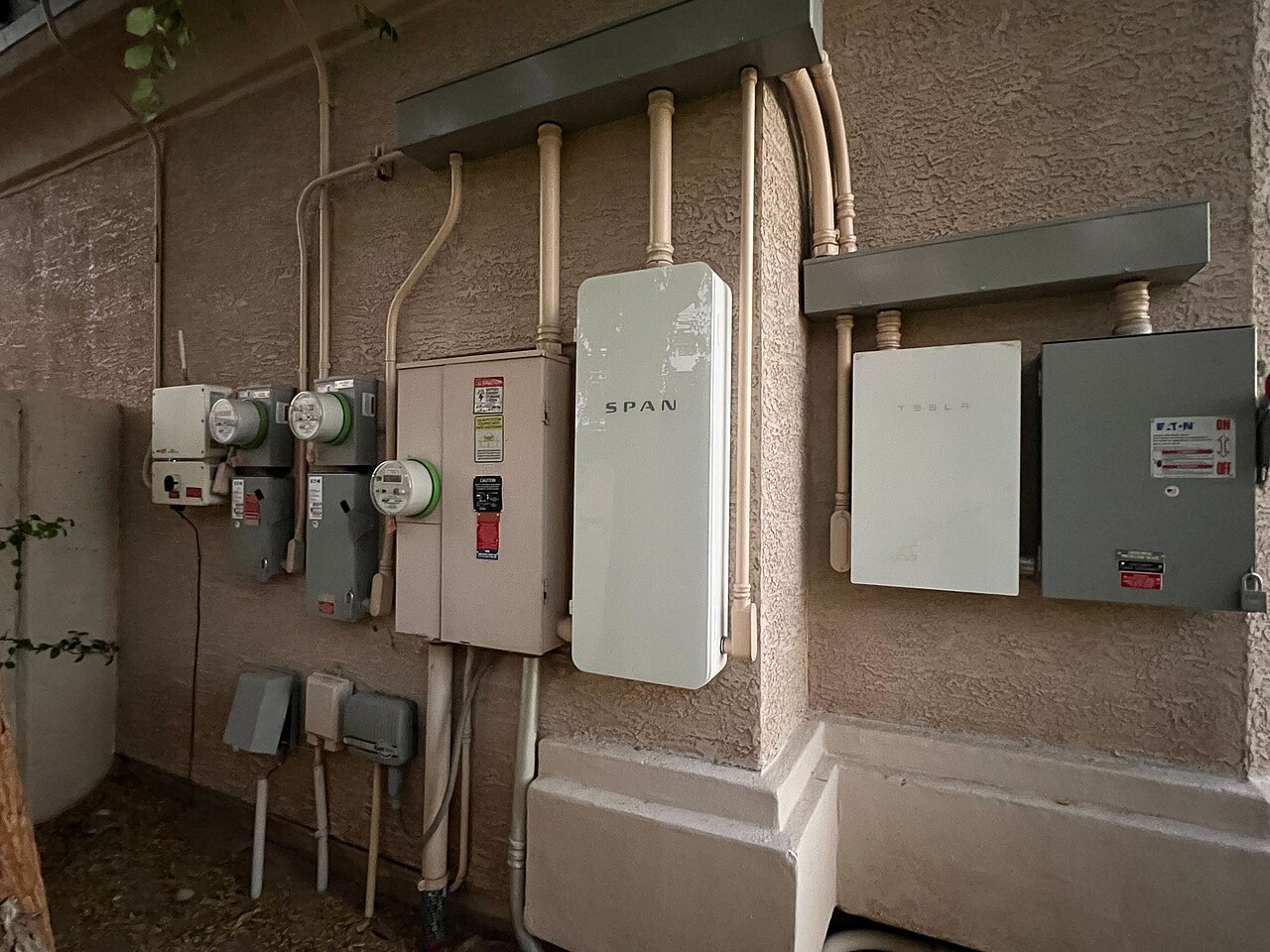
Images via Wikimedia Commons (Welcome to Texas sign, public domain; Residential service entrance, CC BY-SA 4.0; Austin skyline, CC BY-SA 4.0).